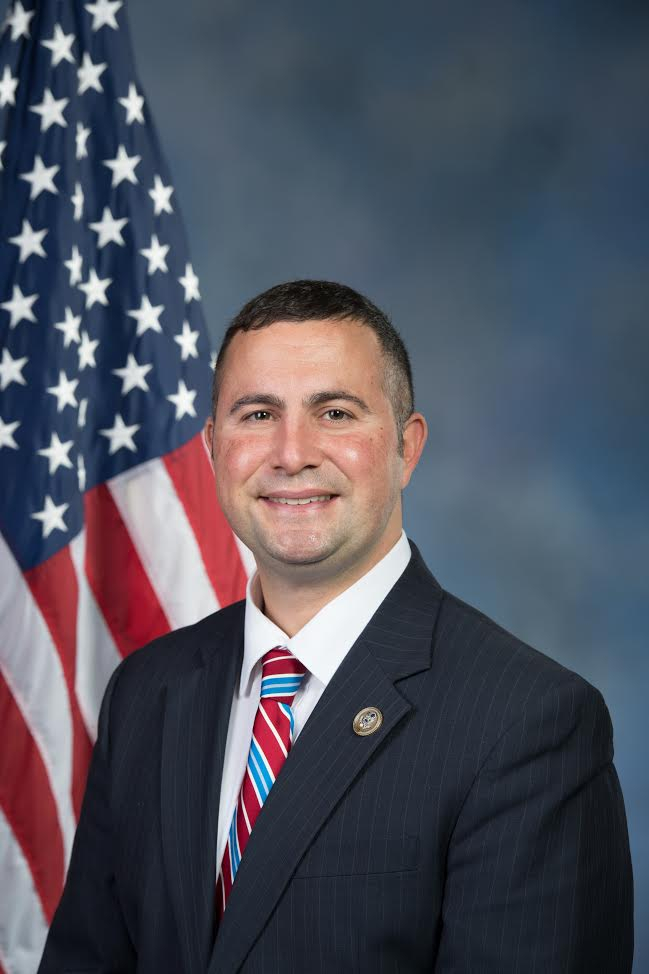
Darren Soto
DU.S. Representative · Florida-9 · 115th-119th, 9 years 8 months
BillHouseIntroduced
U.S. House of Representatives·Introduced Sep 16, 2026·Sep 16, 2026 — Referred to the Committee on Ways and Means, and in addition to the Committees on Energy and Commerce, and the Budget, for a period to be subsequently determined by the Speaker, in each case for consideration of such provisions as fall within the jurisdiction of the committee concerned.
HealthD2R0(2 co-sponsors)
Introduced
The Firefighter PFAS Injury Compensation Act of 2026 creates a federal compensation program for firefighters who have suffered health injuries from exposure to PFAS (per- and polyfluoroalkyl substances), which are chemicals found in firefighting foam and other products. Eligible firefighters who have served at least two years and developed a PFAS-related health condition can receive compensation ranging from $50,000 to $250,000, adjusted based on years of service and special circumstances, with payments coming from a dedicated PFAS Trust Fund. The program, administered by the Secretary of Health and Human Services, covers civilian, military, and volunteer firefighters as well as their heirs, with claims processed within 120 days with no burden of proof on applicants and the ability to appeal decisions to the Court of Federal Claims. Firefighters must submit claims within two years of when regulations become final, and an advisory panel will evaluate claims for unlisted health conditions. The bill is exempt from budget offset requirements, allowing it to proceed without requiring spending cuts or revenue increases elsewhere in the federal budget.
ResolutionHouseIntroduced
U.S. House of Representatives·Introduced Jun 11, 2026·Jun 11, 2026 — Referred to the House Committee on Oversight and Government Reform.
Civil Rights and Liberties, Minority IssuesD29R0(29 co-sponsors)
Introduced
This resolution commemorates the tenth anniversary of the June 12, 2016, Pulse nightclub shooting in Orlando, Florida, which killed 49 people. The measure honors the victims by name and expresses condolences to their families and loved ones, while also recognizing the bravery of local, state, and federal law enforcement and emergency responders who helped during the attack. The resolution emphasizes that the incident was an act of domestic terrorism and notes that Pulse was a safe space for the LGBTQ, Black, and Latino communities. The measure references President Biden's executive actions on gun violence and Congress's passage of the Bipartisan Safer Communities Act in 2022, and calls for continued work on gun safety and mental health legislation. This is a ceremonial resolution with no direct fiscal impact or funding requirements.
BillHouseIntroduced
U.S. House of Representatives·Introduced Jun 4, 2026·Jun 4, 2026 — Referred to the House Committee on Small Business.
CommerceD1R1(2 co-sponsors)DRBipartisan
Introduced
The Protect Our Homes Act establishes a new loan program through the Small Business Administration that allows homeowner associations to borrow money to repair common areas damaged by disasters and to implement measures that protect against future disasters. Eligible organizations are homeowner associations representing single residential communities, and they can receive loans up to $500,000 (or up to $2 million if they are major employers in the disaster area). The loans carry interest rates tied to U.S. Treasury rates plus a small percentage, can be repaid over up to 30 years, and require no collateral for loans of $14,000 or less. The program applies to homeowner associations located in areas affected by disasters within the past five years, as determined by the President, the Secretary of Agriculture, or the SBA Administrator, or certified by a state governor as needing financial assistance.
BillHouseIntroduced
U.S. House of Representatives·Introduced Apr 22, 2026·Apr 22, 2026 — Referred to the House Committee on Science, Space, and Technology.
Science, Technology, CommunicationsD0R1(1 co-sponsor)
Introduced
The STAR Act (Stopping Theft and Aerospace Reconnaissance Act) authorizes NASA and licensed space launch companies to take action against unmanned aircraft, including drones, that pose threats to their facilities and operations. NASA can detect, track, warn operators of, disrupt, seize, and even destroy drones near critical facilities, while private space companies with government licenses can take similar actions at their launch and manufacturing sites. The bill requires both NASA and private entities to post warning signs at affected locations, report incidents to local law enforcement within 30 days, and develop policies in coordination with the Defense Department, Homeland Security, and the Federal Aviation Administration. Drone operators whose aircraft are destroyed or damaged in these protective actions are held liable for the damages caused, and seized drones are subject to forfeiture. The legislation takes effect immediately upon enactment and requires annual reporting to Congress and federal agencies on all incidents where drones are disrupted, seized, or destroyed.
ResolutionHouseIn Committee
U.S. House of Representatives·Introduced Feb 9, 2026·Mar 19, 2026 — Motion to Discharge Committee filed by Mr. Soto. Petition No: 119-18. (<a href="https://clerk.house.gov/DischargePetition/2026031918">Discharge petition</a> text with signatures.)
CongressD2R0(2 co-sponsors)
Committee
This resolution provides for the consideration of the bill (H.R. 3310) to designate Venezuela under section 244 of the Immigration and Nationality Act to permit nationals of Venezuela to be eligible for temporary protected status under such section, and for other purposes.
BillHouseIntroduced
U.S. House of Representatives·Introduced Jan 30, 2026·Jan 30, 2026 — Referred to the House Committee on Oversight and Government Reform.
Government Operations and PoliticsD3R1(4 co-sponsors)DRBipartisan
Introduced
This bill designates the facility of the United States Postal Service located at 2600 Michigan Avenue in Kissimmee, Florida, as the "Robert Guevara Post Office Building".
BillHouseIntroduced
U.S. House of Representatives·Introduced Dec 12, 2025·Dec 12, 2025 — Referred to the House Committee on Energy and Commerce.
Science, Technology, Communications
Introduced
The Stop Communist Radio Act directs the Federal Communications Commission to create a competitive grant program helping small, independently-operated AM and FM radio stations fix interference problems caused by radio signals from Cuba. Eligible stations must be licensed broadcasters with small coverage areas that are not part of larger networks or government agencies, and they must demonstrate they've experienced harmful interference from Cuban radio transmissions. The grants can be used to purchase and operate technology and equipment that reduces this interference while ensuring the funded stations don't create problems for other radio users. The bill requires the FCC to set specific terms and conditions for how grantees operate their new equipment to maintain compliance with federal communications law. While the legislation doesn't specify a funding amount or implementation timeline, it aims to protect local radio broadcasters from signal disruption originating from another country.
BillHouseIntroduced
U.S. House of Representatives·Introduced Dec 4, 2025·Dec 4, 2025 — Referred to the Committee on Energy and Commerce, and in addition to the Committee on Ways and Means, for a period to be subsequently determined by the Speaker, in each case for consideration of such provisions as fall within the jurisdiction of the committee concerned.
HealthD1R0(1 co-sponsor)
Introduced
The Puerto Rico Affordable Care Act of 2025 extends key provisions of the federal healthcare law to Puerto Rico, making the territory subject to the same health insurance requirements as the states. Specifically, the bill requires Puerto Rico to establish a health insurance exchange (a marketplace where individuals can compare and purchase coverage) within one year of enactment, applies federal health insurance market reforms to Puerto Rico's insurance industry, and allows Puerto Rico residents to claim federal premium tax credits to help pay for insurance. These changes affect Puerto Rico's residents and insurance market by bringing them into the federal system that has governed healthcare in the 50 states since 2010. The bill effectively levels the playing field by treating Puerto Rico the same as other states under the Affordable Care Act, with all provisions taking effect one year after the law is signed.
BillHouseIntroduced
U.S. House of Representatives·Introduced Sep 4, 2025·Sep 4, 2025 — Referred to the House Committee on Oversight and Government Reform.
Government Operations and PoliticsD4R0(4 co-sponsors)
Introduced
H.R. 5161 would create a new Office of Young Americans within the Executive Office of the President, headed by a Director appointed by the President. The Director would serve as the principal advisor to the President on issues affecting young Americans ages 18-40, including employment, education, mental health, housing, and climate change, and would coordinate federal government responses to these issues across agencies. The bill allows the Director to appoint up to two full-time staff members and consult with state, local, tribal, and private sector entities, and requires the Director to submit comprehensive reports to Congress and the public at least every five years identifying key challenges facing young Americans and recommending solutions. The Director would be compensated at the Executive Schedule level II rate, while an optional Associate Director could be appointed at level III. The legislation does not specify dedicated funding amounts, instead authorizing the Director to request resources through the President's budget and leverage existing federal agency programs to address identified needs.
BillHouseIntroduced
U.S. House of Representatives·Introduced Aug 19, 2025·Aug 19, 2025 — Referred to the House Committee on Armed Services.
Armed Forces and National Security
Introduced
H.R. 5012 would authorize the President to award the Purple Heart, a military decoration for service members wounded in combat, to Louis Boria, Jr., a Marine Corps veteran who was injured during both World War II and the Korean War. The bill creates a special exception to the normal Purple Heart criteria to recognize Boria's service and sacrifice across these two major conflicts. The legislation directly affects Boria by enabling him to receive the honor he is being recognized for, though it does not involve any funding or specific implementation timeline. This is a private bill, meaning it applies to a specific individual rather than establishing broad policy, and was introduced by Representative Soto in August 2025.
ResolutionHouseIntroduced
U.S. House of Representatives·Introduced Jun 12, 2025·Jun 12, 2025 — Referred to the House Committee on Oversight and Government Reform.
Civil Rights and Liberties, Minority IssuesD41R0(41 co-sponsors)
Introduced
H. Res. 514 is a commemorative resolution marking nine years since the June 12, 2016, Pulse nightclub shooting in Orlando, Florida, which killed 49 people. The resolution honors the victims by name, offers condolences to their families and loved ones, and recognizes the bravery of first responders and emergency personnel who assisted during the tragedy. It expresses solidarity with all Americans regardless of race, ethnicity, religion, sex, sexual orientation, or gender identity in standing against terrorism and hate. The resolution also references past gun violence prevention efforts, including over 25 executive actions signed by President Biden and the Bipartisan Safer Communities Act passed by Congress in 2022, while calling for continued work toward gun safety and mental health legislation. This is a ceremonial measure with no funding or implementation timeline, serving primarily to commemorate the victims and reaffirm national values of unity and safety.
BillHouseIntroduced
U.S. House of Representatives·Introduced May 20, 2025·May 20, 2025 — Referred to the House Committee on the Judiciary.
ImmigrationD1R2(3 co-sponsors)DRBipartisan
Introduced
The Protect Patriot Spouses Act makes it easier for foreign spouses of active-duty or honorably discharged U.S. military members to obtain permanent legal status in the United States. The bill allows these military spouses to adjust their immigration status without meeting certain standard immigration requirements, and it gives the Department of Homeland Security discretion to waive certain grounds for inadmissibility (such as prior health or criminal issues unrelated to immigration status) if the spouse poses no threat to public safety. The legislation also allows military spouses who were previously removed from the country or left voluntarily to apply for immigrant visas from abroad, and establishes a temporary nonimmigrant visa program to allow them to reunite with their U.S. citizen spouse while their permanent status application is pending. The bill does not establish specific funding amounts or implementation timelines. This measure aims to support military families by streamlining the immigration process for the foreign spouses of service members.
BillHouseIntroduced
U.S. House of Representatives·Introduced May 8, 2025·May 8, 2025 — Referred to the Committee on the Judiciary, and in addition to the Committee on the Budget, for a period to be subsequently determined by the Speaker, in each case for consideration of such provisions as fall within the jurisdiction of the committee concerned.
ImmigrationD10R1(11 co-sponsors)DRBipartisan
Introduced
This bill designates Venezuela for Temporary Protected Status (TPS), allowing Venezuelan nationals currently in the United States to obtain legal protection from deportation for 18 months from when the bill becomes law. To qualify, Venezuelans must have been continuously physically present in the U.S. since the bill's enactment, meet standard immigration admissibility requirements, and register with the Department of Homeland Security. The bill allows the government to charge a $360 application fee, though applicants can request a waiver, and permits those granted TPS to travel abroad temporarily if they face emergency circumstances with prior authorization. The legislation affects Venezuelan immigrants seeking legal status protection and was introduced by Representatives Soto, Salazar, and Wasserman Schultz in May 2025.
BillHouseIntroduced
U.S. House of Representatives·Introduced Apr 1, 2025·Apr 1, 2025 — Referred to the House Committee on Natural Resources.
Public Lands and Natural Resources
Introduced
H.R. 2580 designates a 31-mile segment of the Kissimmee River in Florida as part of the National Wild and Scenic Rivers System, one of the country's most protected waterway designations. The designated section runs from approximately 16 miles downstream of Lake Kissimmee to about 15 miles upstream of Lake Okeechobee and will be classified as a "recreational river," meaning it allows some human activity while protecting its scenic and ecological values. The bill places this river segment under the management of the Secretary of the Interior and prevents federal land within the boundaries from being mined, leased for minerals or geothermal resources, or sold under public land laws, while respecting existing legal rights. The legislation does not specify dedicated funding amounts or implementation timelines in the text provided. This designation primarily affects outdoor recreationists, conservationists, and Florida residents who use or depend on the Kissimmee River ecosystem.
BillHousePassed House
U.S. House of Representatives·Introduced Mar 3, 2025·Jul 15, 2025 — Received in the Senate and Read twice and referred to the Committee on Commerce, Science, and Transportation.
CommerceD2R1(3 co-sponsors)DRBipartisan
Passed
Consumer Safety Technology ActThis bill (1) establishes a pilot program to explore the use of artificial intelligence to support the Consumer Product Safety Commission (CPSC), and (2) requires reports related to blockchain technology and digital tokens.Specifically, the CPSC must consult with relevant stakeholders, such as data scientists and product manufacturers, and use artificial intelligence for a least one of the following purposes: (1) tracking trends in injuries involving consumer products, (2) identifying consumer product hazards, (3) monitoring the sale of recalled consumer products, or (4) identifying consumer products that do not meet specified importation requirements related to product safety.The bill also requires (1) the Department of Commerce to report on existing and emerging uses of blockchain technology for consumer protection, and (2) the Federal Trade Commission to report on its efforts to prevent unfair or deceptive practices relating to digital tokens.
BillHouseIntroduced
U.S. House of Representatives·Introduced Feb 13, 2025·Feb 13, 2025 — Referred to the House Committee on the Judiciary.
ImmigrationD21R3(24 co-sponsors)DRBipartisan
Introduced
Venezuelan Adjustment Act This bill requires the Department of Homeland Security (DHS) to grant lawful permanent resident status to qualifying nationals of Venezuela. A national of Venezuela shall be eligible if that individual (1) applies for lawful permanent resident status no later than three years after this bill's enactment, (2) entered the United States on or before December 31, 2021, (3) has been continuously physically present in the United States for at least one year when filing their application, (4) is otherwise eligible to receive an immigrant visa, and (5) is not inadmissible under various grounds such as a conviction for an aggravated felony. Certain grounds for inadmissibility, such as the public charge ground, shall not apply. The spouse, child, or unmarried son or daughter of an eligible individual shall also be eligible. If an individual has applied for lawful permanent resident status under this bill and is subject to exclusion, deportation, or removal proceedings, DHS may not order that individual's removal unless DHS has made a final determination to deny the application. DHS must provide work authorization to an individual whose application has been pending for more than 180 days, and may also provide authorization before that.
BillHousePassed House
U.S. House of Representatives·Introduced Jan 31, 2025·Jul 15, 2025 — Received in the Senate and Read twice and referred to the Committee on Energy and Natural Resources.
Emergency ManagementD6R2(8 co-sponsors)DRBipartisan
Passed
Sinkhole Mapping Act of 2025This bill directs the U.S. Geological Survey (USGS) to establish a program tostudy the short-term and long-term mechanisms that cause sinkholes, including extreme storm events, prolonged droughts causing shifts in water management practices, aquifer depletion, and other major changes in water use; anddevelop maps, using three-dimensional elevation data, that depict zones that are at greater risk of forming sinkholes.The USGS must establish a public website that displays such maps and other relevant information critical for use by community planners and emergency managers.
BillHouseIntroduced
U.S. House of Representatives·Introduced Jan 23, 2025·Jan 23, 2025 — Referred to the Committee on Oversight and Government Reform, and in addition to the Committee on Natural Resources, for a period to be subsequently determined by the Speaker, in each case for consideration of such provisions as fall within the jurisdiction of the committee concerned.
Environmental Protection
Introduced
H.R. 704 directs the U.S. Postal Service to create and sell a special Manatee Semipostal Stamp—a type of stamp sold at a premium price above regular postage. All revenue generated from selling this stamp would go to the U.S. Fish and Wildlife Service to fund manatee conservation and habitat protection efforts across the United States. The stamp must be available to the public for at least two years, with sales beginning no later than one year after the bill becomes law. The bill contains no additional funding mechanism since it relies on voluntary consumer purchases of the stamps. This legislation would allow Americans to support manatee conservation simply by choosing to use these special stamps instead of regular postage.